

Quick Summary
- Last staging is Saturday
For an audience, the level of thought, detail and coordination that goes into a theatre production may sometimes be underappreciated. From casting, costuming, designing and building a set to stage lighting and, of course, the weeks of rehearsals, having a great team helps the whole process flow more easily and ensures a tighter, better, more entertaining performance.
Title, show information
Performances will be at the , on Feb. 26, 27, 28 and March 5, 6 at 7 p.m. and Feb. 28 and March 7 at 2 p.m.
Tickets are $22 for adults; $18 faculty and staff; $18 youth or seniors; $12 senior or 51³Ô¹ÏºÚÁÏ Davis students. Tickets may be purchased at the 51³Ô¹ÏºÚÁÏ Davis Ticket Office, located on the north side of Aggie Stadium, 10 a.m. to 5 p.m. weekdays, by phone 530-752-2471 during the same hours, or online at .
And that’s the expectation for the upcoming winter musical, , directed and choreographed by Granada Artist-in-Residence .
The first full musical presented by the since 2020, The Drowsy Chaperone tells the story of a man, portrayed by 51³Ô¹ÏºÚÁÏ Davis staff member Michael French, looking back on his life via his relationship to an audio recording of an old musical from 1928. Using his imagination only, "the Man in the Chair," drawing from old Hollywood and musical theatre tropes and stereotypes, sends the stars of the musical into a mash-up performance wherein hilarity, beauty and chaos ensue.
The satire, a winner of five Tony Awards, has been called a “love letter to theatre.�
But it’s more than that.
“For me, it's more about the act of sharing art that is meaningful to us and why it’s meaningful to us,� Guter said. “That's something that's really unique and special about theatre, is that you experience theatre with other people — it’s a shared experience and it's actually necessary to the experience.�
Over the course of the musical, the audience learns why "the Man in the Chair" is sharing this recording with them, often breaking the fourth wall and even interacting with his imagined characters: two lovers on the eve of their wedding, a bumbling best man, a desperate theatre producer, a scatterbrained hostess, two gangsters posing as pastry chefs, an egotistical Don Juan and an intoxicated chaperone.
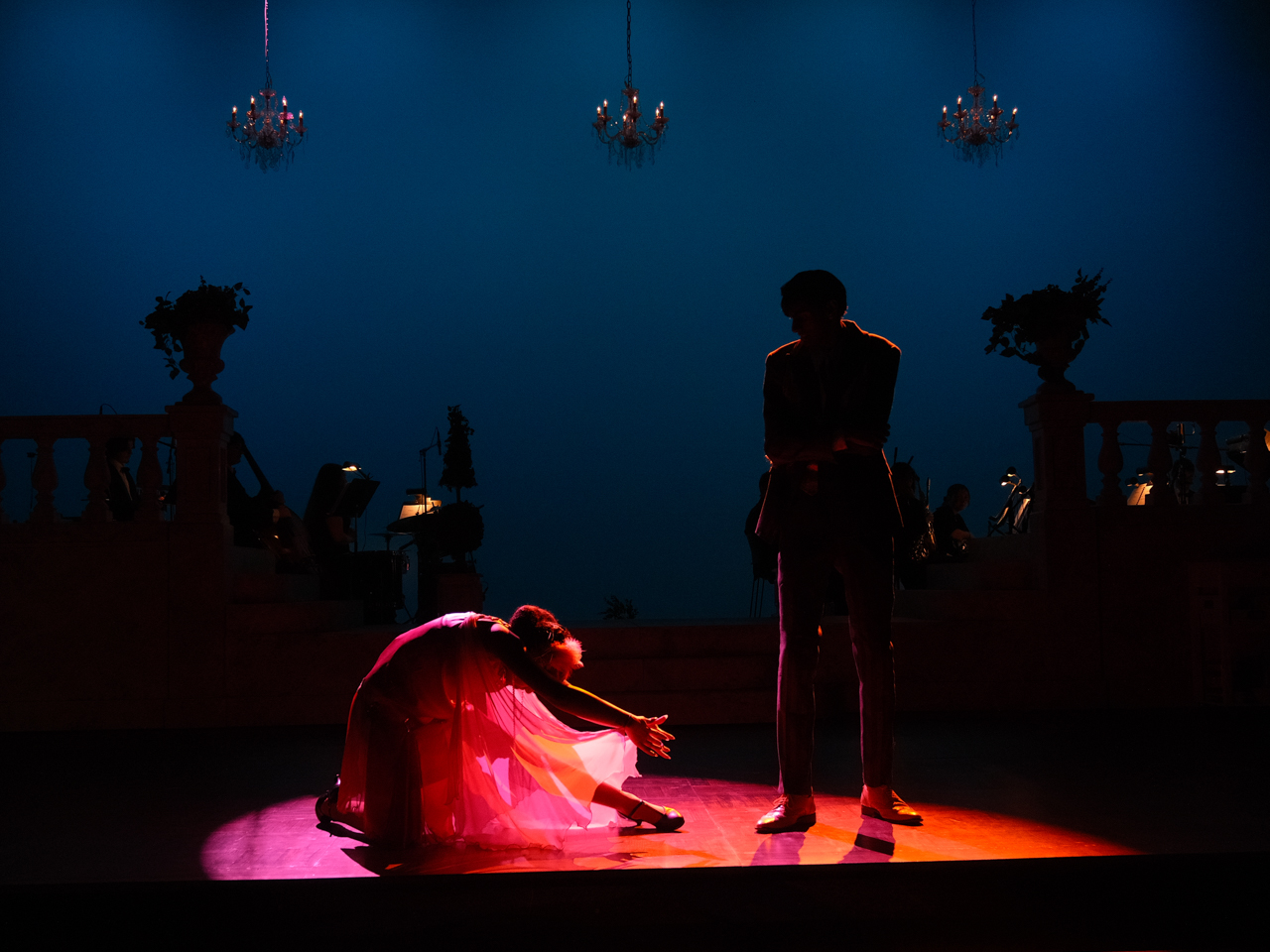
A scene from 'The Drowsy Chaperone.' (Carol Kepler/51³Ô¹ÏºÚÁÏ Davis)
Director, choreographer known for national role in 'Annie'
The department’s search for the right director for the musical comedy was still ongoing when longtime arts marketer French, always the problem-solver, suggested Guter for the role. Though they had never worked directly together, French knew Guter and knew he was the right fit. French had just recently seen the award-winning actor and director a few months prior in Folsom, playing the role of “Rooster� in a touring production of Annie.
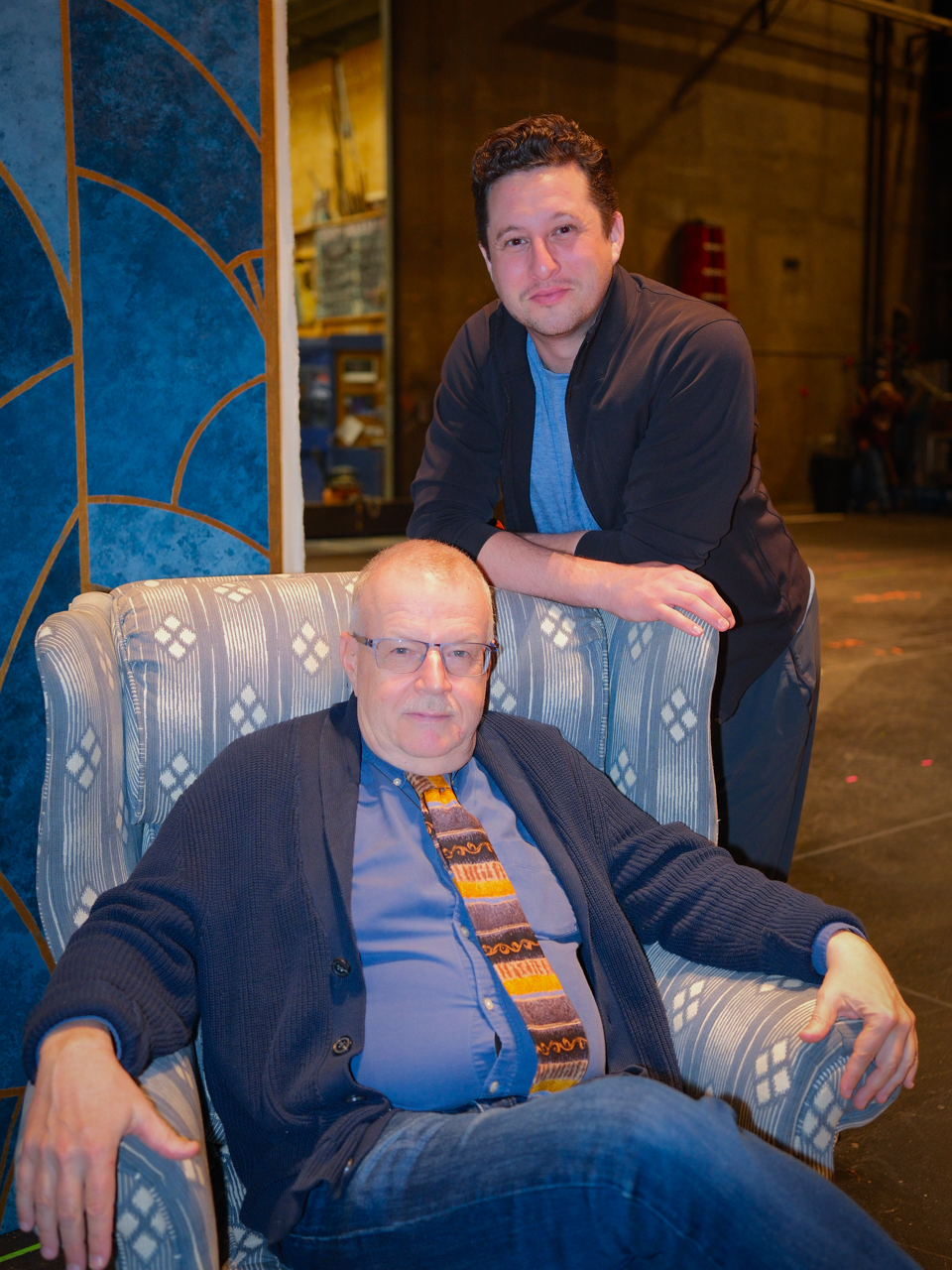
Director Rhett Guter stands behind Michael French, the actor portraying 'the Man in the Chair' , in this winter season's production of 'The Drowsy Chaperone.' (Carol Kepler/51³Ô¹ÏºÚÁÏ Davis)
Guter portrayed the role opposite Whoopi Goldberg at Madison Square Garden, eliciting praise from critics and , which noted he was “oozing with charm� and described him as “a terrific dancer.�
As a director, Guter has created groundbreaking theatrical experiences across multiple venues and formats, including co-created with composer Adam Record. His directing portfolio includes the critically acclaimed Hadestown Teen Edition, I Left My Dignity in My Other Purse starring (Three’s Company), and the immersive musical Take Me Away. His extensive choreography credits include West Side Story, Cabaret, The Music Man, Anything Goes, and Peter and the Starcatcher at the Tony Award-winning .
In October, after Guter was selected as the director and winter 2026 Granada-Artist-in-Residence, he flew out from Cedar City, Utah, to Davis for 10 days to teach a workshop to students and hold auditions for The Drowsy Chaperone.
Two days in, he asked French if he’d be willing to play “the Man in the Chair,� the only role in the show that requires no big song and dance, and seemingly appealed less to students.
“He phrased it as a question,� French said, “is there a history of ever having to cast faculty or staff? And it turned out, yes.�
But French insisted the role should be played by a student. By the end of auditions, however, no one else had been cast. And the determined director didn’t give up.
Michael French is 'the Man in the Chair'
As Guter put it, French is “the Man in the Chair.� He wasn’t the only one to have this opinion. Even before Guter was hired, the stage manager and production manager both said the same, and Department Chair agreed.
Though Guter and French have known each other since 2011, Guter didn’t accept the role with the intent of casting French. He was initially looking cast a student, but he knew it would be a challenge when conveying the generational divide.
French happens to be five decades older than the rest of the cast but, Guter said, he shares other commonalities with the character.
“Michael is ‘the Man in the Chair’ in many ways — there's a deep love and appreciation for theatre that he loves to share and talk about,� he said.
French, who has also worked as a theatre publicist, is known for his passion for both education and the arts. He is an in the College of Letters and Science at 51³Ô¹ÏºÚÁÏ Davis, and is always working to help make sure student work is seen and appreciated by as many people as possible.
The role marks French’s return to the stage after more than 40 years. The acting credits from his former life include Evelyn Oakleigh in Anything Goes, Theseus in A Midsummer Night’s Dream, and Brinsley Miller in Black Comedy. He has also directed productions of Into the Woods, Little Shop of Horrors, Crimes of the Heart, and Bad Habits.
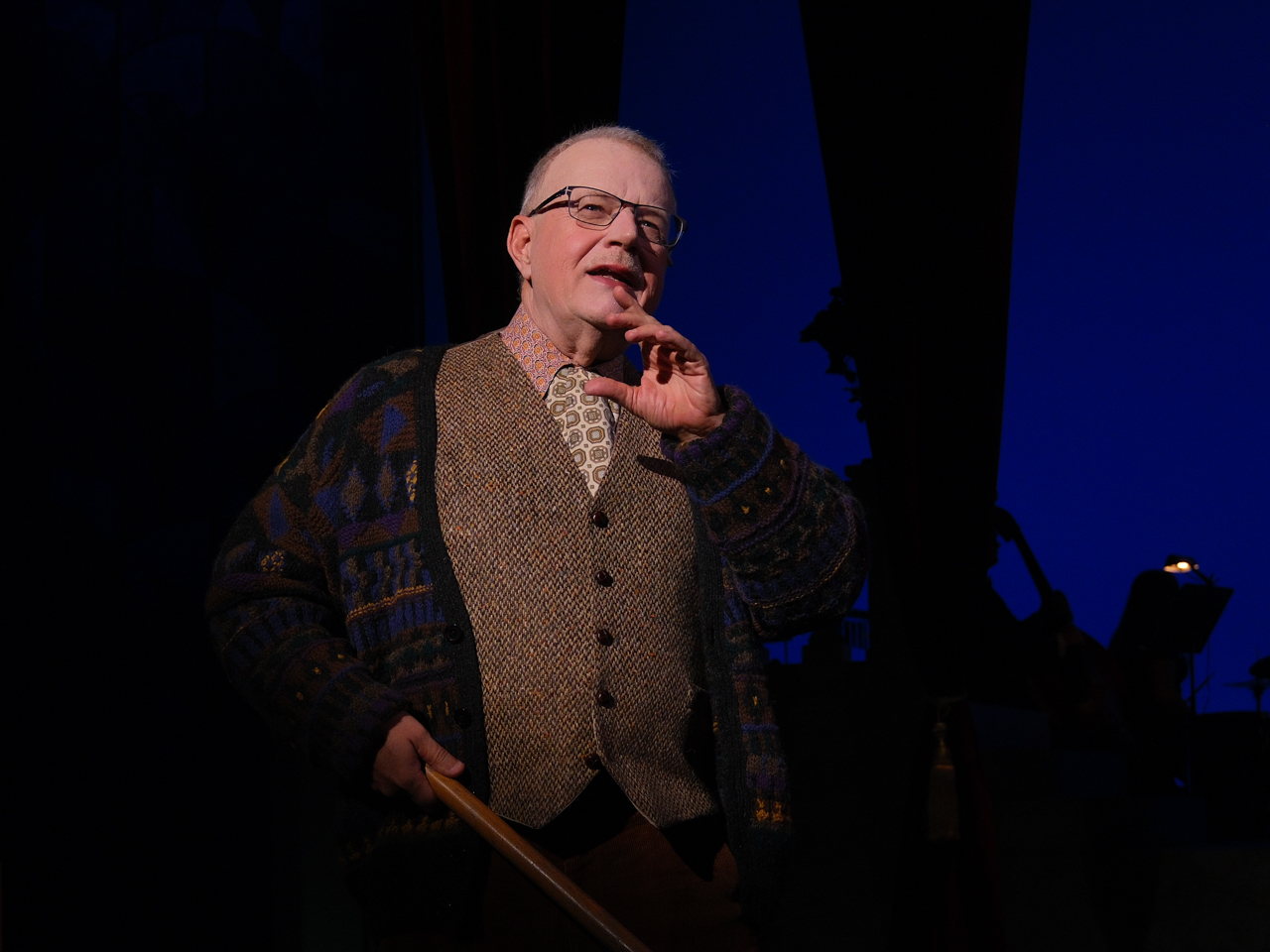
Michael French during a recent rehearsal of 51³Ô¹ÏºÚÁÏ Davis' winter production of 'The Drowsy Chaperone.' (Carol Kepler/51³Ô¹ÏºÚÁÏ Davis)
Collaboration across teams brings success
The cast and crew have been through six weeks of rehearsals, staying late nearly every weeknight and spending their Saturdays with Guter. The musical is accompanied by a live orchestra and it, along with the cast, includes undergraduate and graduate students from across disciplines.
“They're all really terrific and committed to it and my biggest challenge is keeping up with them,� French said.
is the production manager, lecturer Ian Wallace is the scenery designer, Assistant Professor Ethan Hollinger is the lighting designer, Megan Kimura is the sound designer and Patrick Burns is the music director. Mario Sandoval is the stage manager and the assistant choreographer is Mikayla Freeman, both undergraduate students. Alum , M.F.A. ‘20, has returned to 51³Ô¹ÏºÚÁÏ Davis as the production’s costume designer.
“There's a great attention to detail. The collaboration with all of the other teams has been really awesome,� Guter said. “The creative problem-solving across everyone and the communication — I've been super, super impressed.�
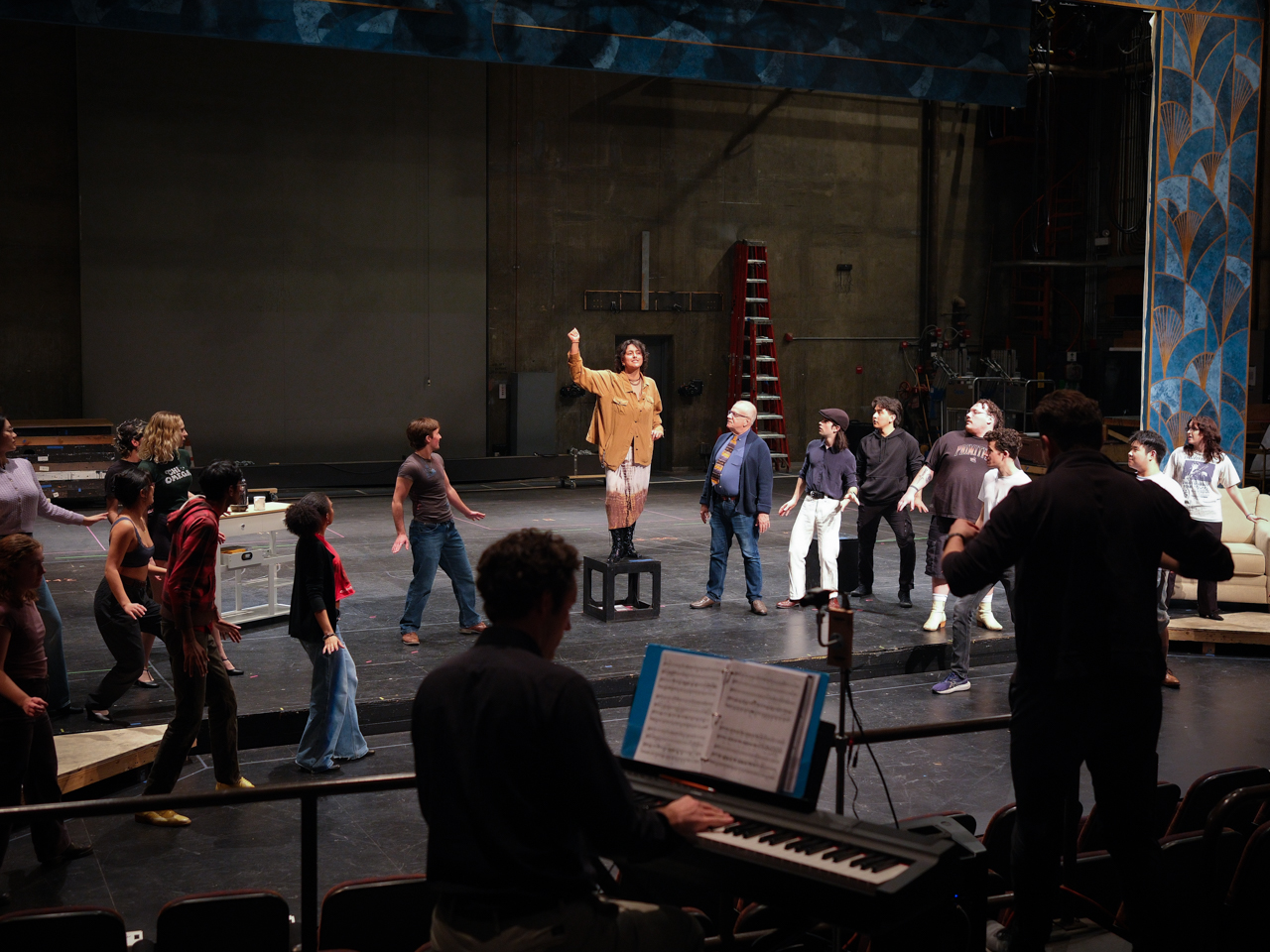
A recent rehearsal of 51³Ô¹ÏºÚÁÏ Davis' production of "The Drowsy Chaperone." (Carol Kepler/51³Ô¹ÏºÚÁÏ Davis)
A musical comedy with a bit of an edge
The and the man’s life are told through movement and choreography, while the setting, primarily, is his cramped New York City apartment. With the progression of the story, the scene transforms into something more fantastical.
“We’re inside this person’s imagination,� Guter said.
And, while it is a comedy, there are a few dark elements, including one edgier, chaotic number, which even French called “whack.�
“There’s definitely that humor, there’s definitely that joy,� Guter said, “but something I feel strongly about is dark pieces have to have lightness to them for them to feel dark, and light pieces have to have darkness in them for them to feel light. It needs a contrast."
As some of the production's material has been altered from the original The Drowsy Chaperone, and his students which gives additional background on the plot, characters and original context the musical.
"As it unfolds, in a very light-handed way, which I think is brilliant, you start to realize that this person isn't just sharing this arbitrarily, he's sharing it because he has a really deep connection with it and it's helped him through some really painful times," Guter said. "It has brought up questions for him in his own life that he is still battling with, which is what art should do — it should both comfort us and challenge us."
If that isn’t enough to convince you to see it, French said: “There is one costume in the show that will blow everybody's mind right out. It's spectacular.�
Media Resources
Maria Sestito, College of Letters and Science, msestito@ucdavis.edu