

To commemorate the centennial of America’s most famous highway, Route 66, the Archives and Special Collections Department is joining statewide celebrations with a two‑case exhibition of select materials from its collections in Shields Library. “Celebrating 100 Years of the Mother Road: Route 66� is located in the lobby, next to the main stairwell.
Although Route 66 was officially decommissioned in 1985, much of the roadway still remains and endures in the popular imagination as a symbol of adventure and road trips across the desert in the American West.
The exhibit cases are divided into two sections: Nostalgia and Complicating Nostalgia. In Nostalgia, viewers are introduced to a brief timeline tracing the establishment and decommissioning of Route 66, samples of the kinds of notes motorists could record in guidebooks, and recommendations for diners and restaurants along Route 66 in California.
This case also features an excerpt from John Steinbeck’s award-winning novel The Grapes of Wrath. Route 66 was fully paved in 1938, the same period in which the novel is set. Steinbeck’s story follows the Joad family as they flee drought, dust storms, and displacement in Oklahoma, traveling west in search of a better life in California during the height of the Great Depression and the Dust Bowl migration of 1938–1939. Steinbeck famously described Route 66 as the “mother road,� capturing its significance as the central artery of westward migration:
66 is the path of a people in flight, refugees from dust and shrinking land, from the thunder of tractors and shrinking ownership, from the desert’s slow northward invasion, from the twisting winds that howl up out of Texas, from the floods that bring no richness to the land and steal what little richness is there. From all of these the people are in flight, and they come into 66 from the tributary side roads, from the wagon trucks and the rutted county roads. 66 is the mother road, the road of flight.�
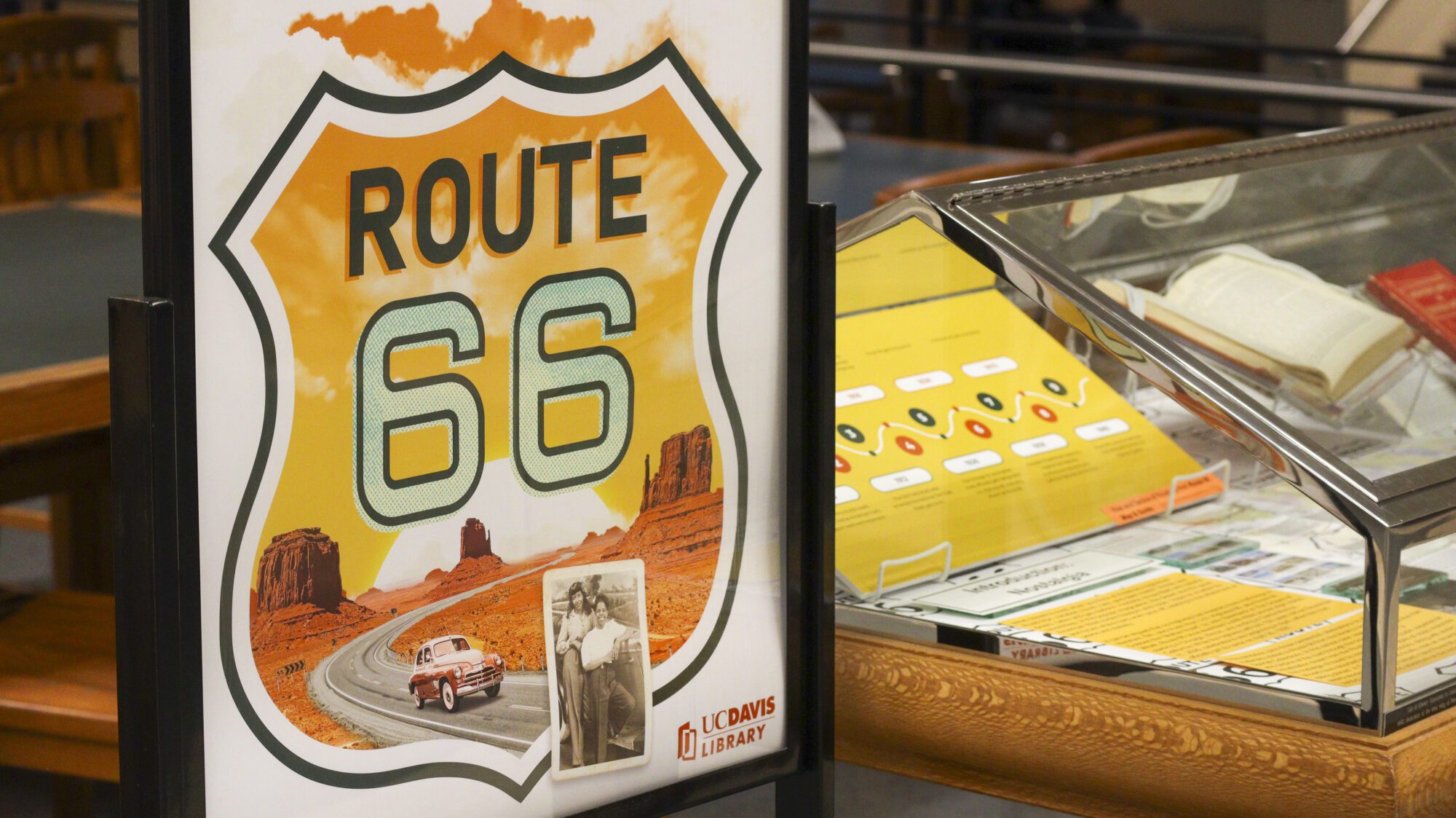
Celebrating 100 Years of the Mother Road: Route 66 exhibition. (51³Ô¹ÏºÚÁÏ Davis Library/Tim Silva) Route 66 Map & Guide: America’s Iconic Mother Road by the U.S. Bureau of Land Management, Needles and Barstow Field Offices, 2015 and 2017. (51³Ô¹ÏºÚÁÏ Davis Library/Tim Silva)
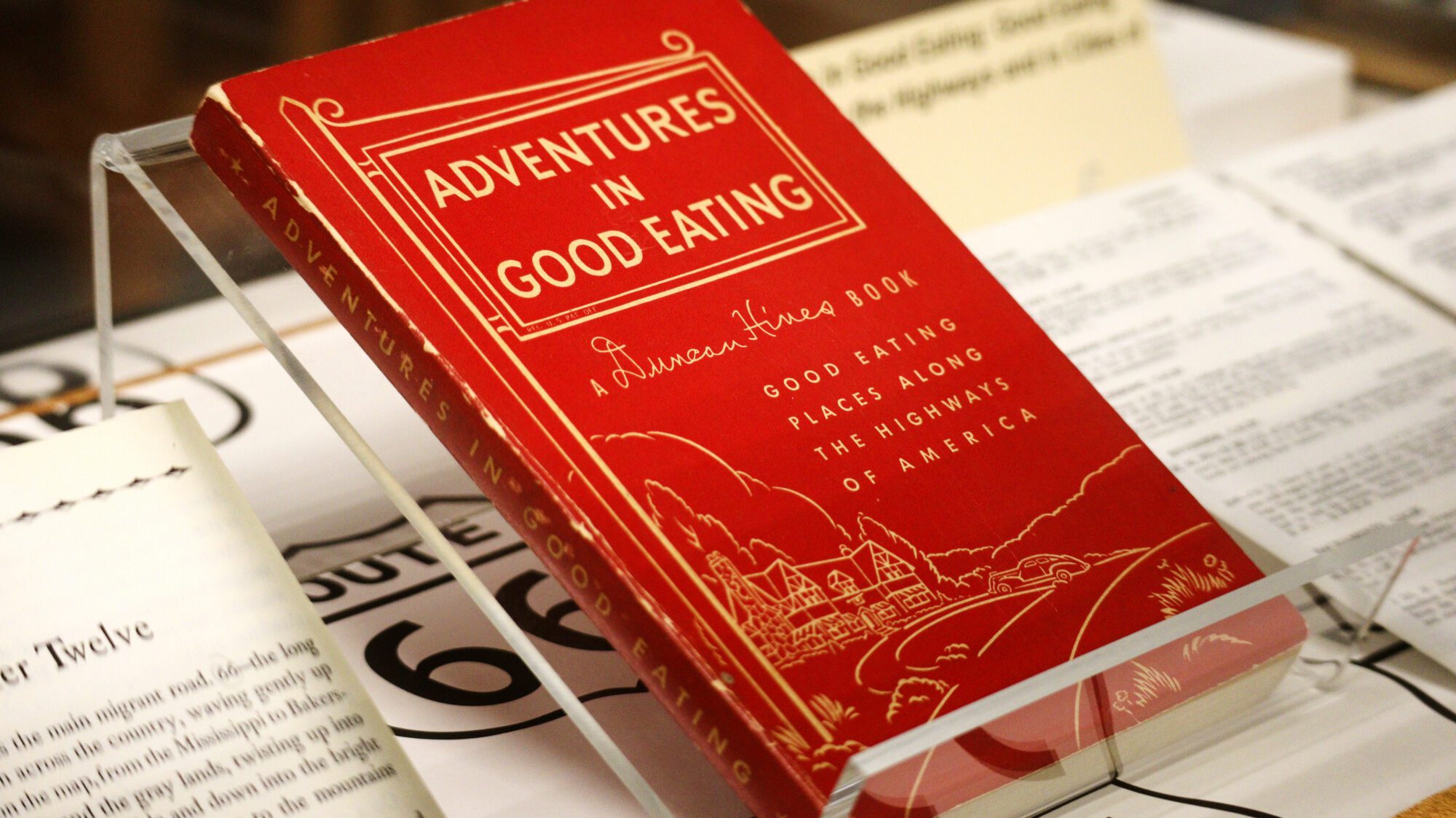 Adventures in Good Eating: Good Eating Places Along the Highways and in Cities of America by Duncan Hines, 1948. (51³Ô¹ÏºÚÁÏ Davis Library/Tim Silva)
In Complicating Nostalgia, viewers encounter a more complex history of the Mother Road. This section of the exhibit explores what westward travel was like for migrant farm workers, as recounted in Elizabeth Strickland’s presentation “Living Okie History,� and what traveling Route 66 was like for Black motorists before the Civil Rights Act of 1964. This perspective is presented through Candacy A. Taylor’s Overground Railroad: the Green Book and the Roots of Black Travel in America and the library’s 1953 copy of The Negro Travelers’ Green Book by Victor H. Green.
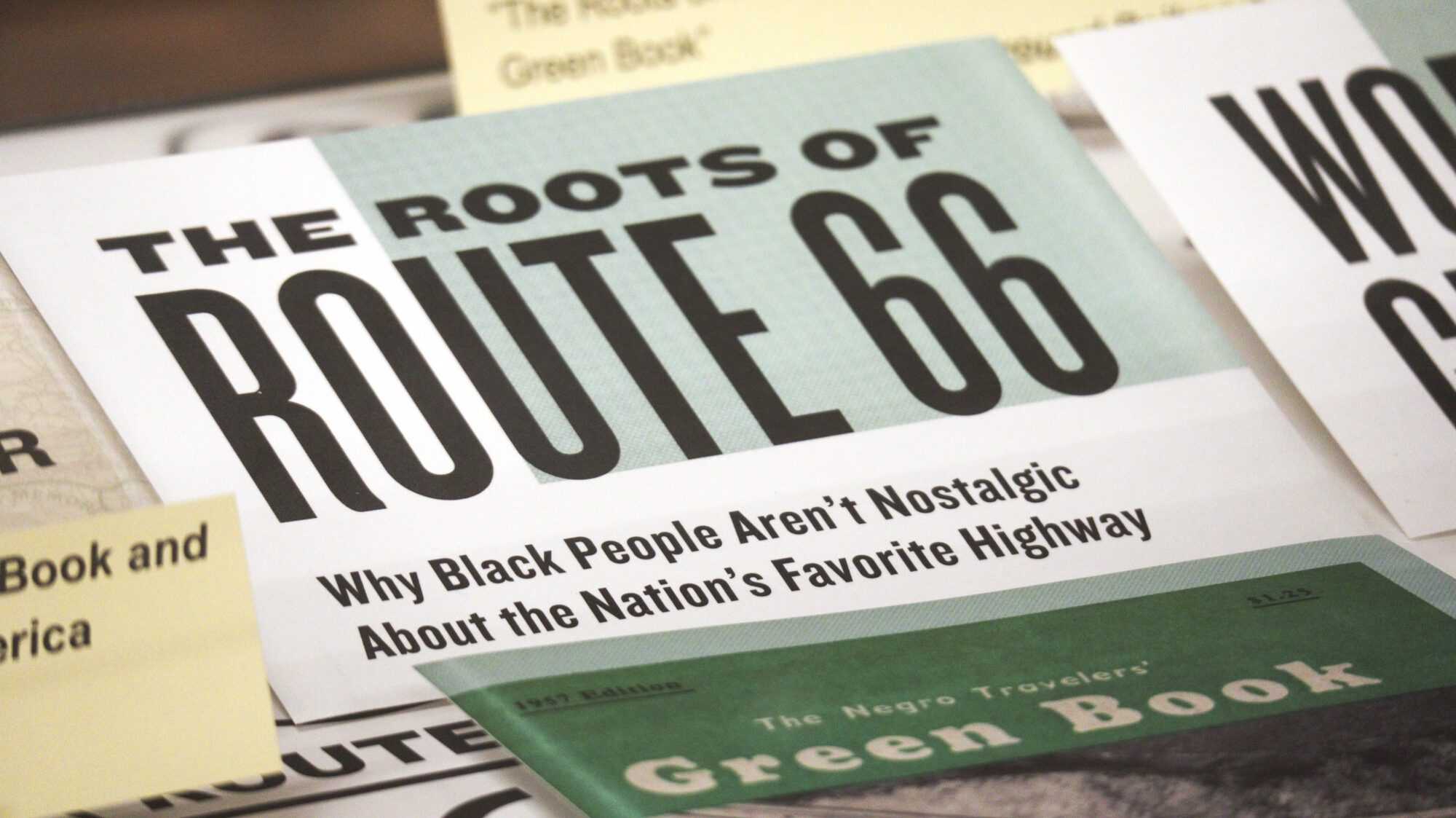 Chapter “The Roots of Route 66â€� from Overground Railroad: the Green Book and the Roots of Black Travel in America by Candacy A. Taylor, 2020. (51³Ô¹ÏºÚÁÏ Davis Library/Tim Silva)
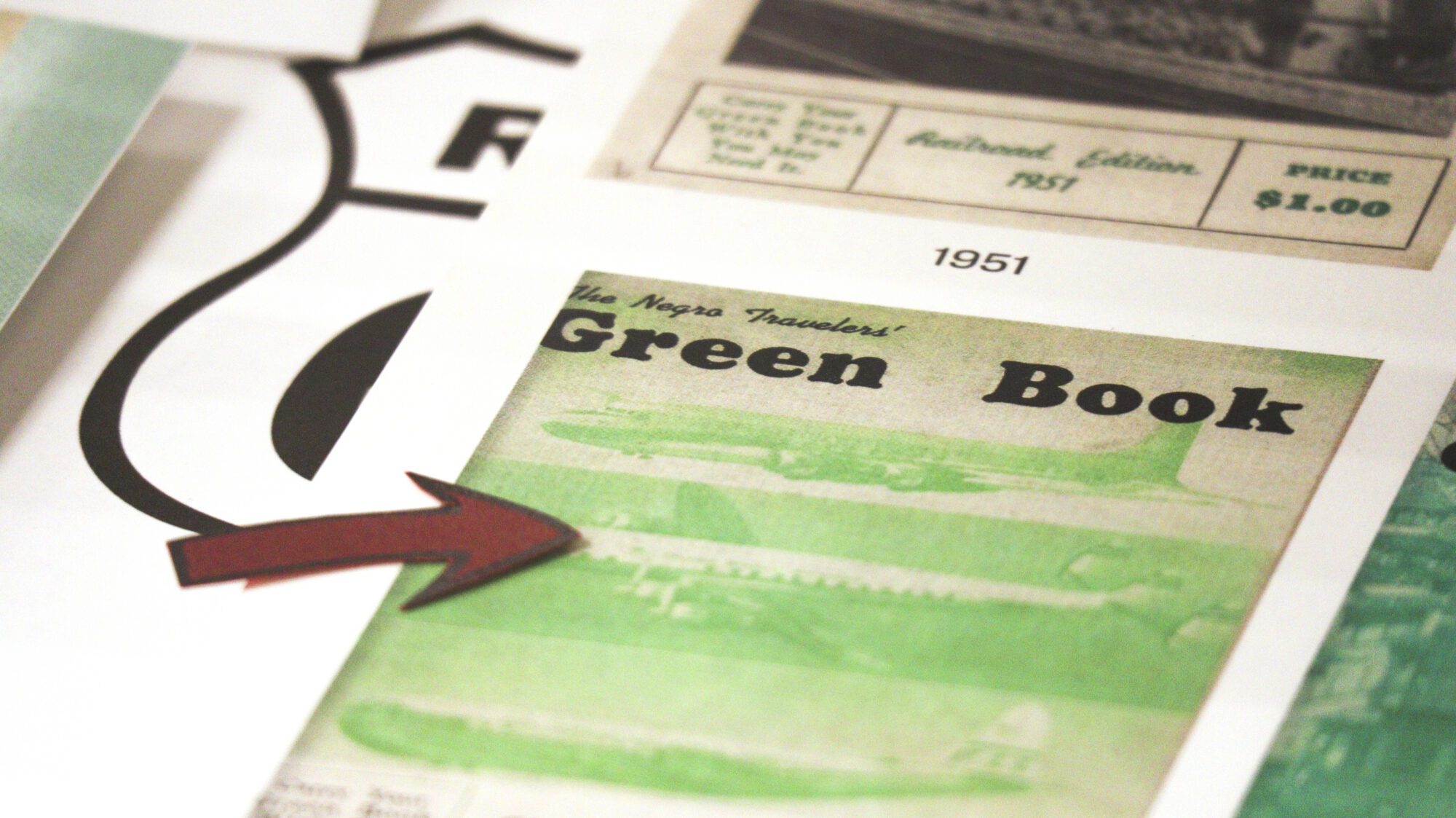 The Negro Travelers’ Green Book by Victor H. Green, 1953. (51³Ô¹ÏºÚÁÏ Davis Library/Tim Silva)
It is impossible to display the entire mythology and complex history of travel on Route 66 within two exhibit cases. To learn more, visit for schedules of special events, and for information about the Green Book Project. Don’t forget to stop by Shields library to view the exhibition in person. Celebrating 100 Years of the Mother Road: Route 66 will be on display until August 19, 2026.
Media Resources
Arts Blog Editor: Karen M. Nikos-Rose, kmnikos@ucdavis.edu